
Nothing Linear

We arrived in the foreign city, excited to see our young adult son and his new life. Now it’s the next morning and I’m down for the count.
Stomach flu – 1
Rachel – 01
If one has the greatest fortune to live most of one’s days in good health, one forgets how truly awful it feels to be laid low by a virus.
While my body lies prone, my mind replays an animated video I saw on YouTube a couple of years ago detailing how various biologic mechanisms whirl into action in response to an invasive virus. The moving images and my felt sensations meld and merge. My world—limited to this room, this bed.
The week before—in the online Buddhist study course my wife and I take together—we learned about the Buddha’s recommendation to practice the Five Daily Contemplations. Our teacher suggested that before we meditated each day, we write or read the words aloud.
Here they are:
Five Daily Contemplations
I am of the nature to grow old; I cannot avoid aging.
I am of the nature to become ill; I cannot avoid illness.
I am of the nature to die; I cannot avoid death.
All that is mine, dear, and loved will vanish.
I am the owner of my actions; born of my actions; related to my actions. Whatever I do for good or for bad I shall be the heir.
At some point in the illness—it’s a blur—my leg muscles ached, my stomach felt equally empty and angry, and a pity-party raged in my mind. I was deeply unhappy.
Uninvited, the Buddha’s line about illness arrived in my mind. The two ideas surfaced: the body’s nature is to become ill. I, Rachel, can’t avoid illness.
For a brief, beautiful moment, those two ideas actually eased my mental suffering. I glimpsed how my illness wasn’t personal. Yes, it was a pain in the ass. Yes, I missed out on some fun adventures. But that is the nature of the body. And why would I be exempt from that?
It was a flash of insight, of freedom.
The moment passed—as every moment does. But its echo remains.
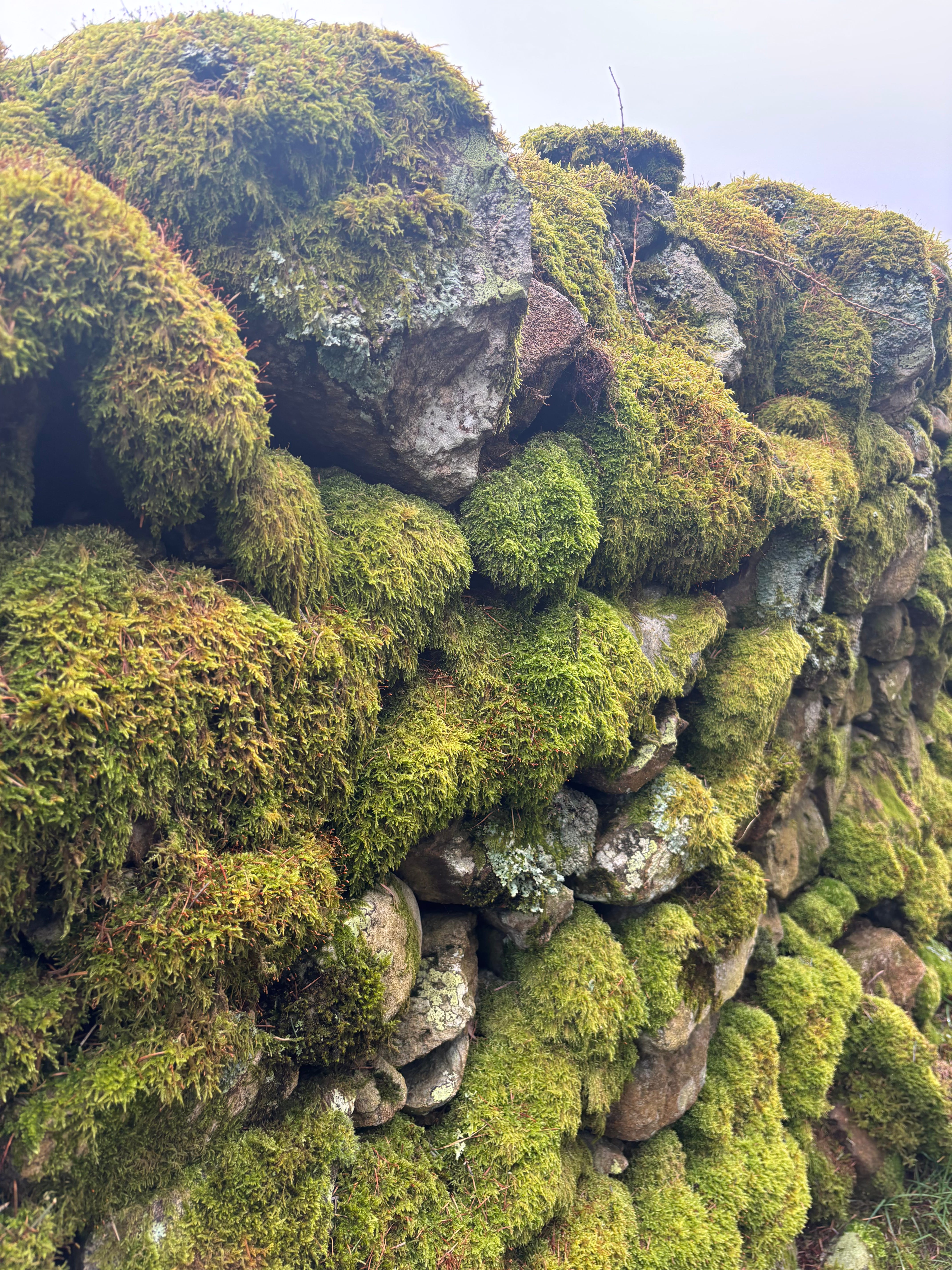
At the end of her poem “In Blackwater Woods,” Mary Oliver writes these now-well-known words:
…
To live in this world
you must be able
to do three things:
to love what is mortal;
to hold it
against your bones knowing
your own life depends on it;
and, when the time comes to let it go,
to let it go.“In Blackwater Woods” by Mary Oliver, from American Primitive, Back Bay Books, 1983.
Yes, Mary.
To love, to hold and to let go.
And—how will we learn?
With whom will we practice?
When I was a Unitarian Universalist congregational minister, it was commonplace to meet visitors and congregants who’d been raised in a religious tradition, left it, and never found a way back as an adult. Theological concepts introduced in childhood were rarely reframed or explored with more nuance, opening a door into an adult relationship with a faith tradition.
It comes to mind during the Lenten season in the Christian liturgical year, which is happening now. I took note of Kate Bowler’s social media feed where she responded to a certain corner of “Christian influencer” world with these words:
For the next thirty seconds, I’m going to de-influence Lent for you.
If Lent is a reset, that is not Lent.
If it’s a glow-up or a plan or forty days to get it together, that is not Lent.
If it promises relief or closure or emotional resolution, that is not Lent.
If it expects your grief to behave or your body to cooperate, or your longing to quiet down, that is not Lent.It started with dirt.
You are finite.
That is not a problem to be solved.
If Lent is here to fix you or optimize you or make you impressive, that is not Lent.
Lent interrupts the fantasy that one day you will wake up finished, less restless, less tender, less achy, less human.The ache is not a phase.
The ache is not a failure.
The ache is just what it means to be alive.So this is Lent.
No solutions--just honesty, limits, longing, dust.
-- Kate Bowler, 24 February 2026 via Instagram
If you grew up in a Christian tradition, this might be a new understanding of Lent. If you’re interested in re-discovering Lent or learning about it, her newsletter is one place to start.

I feel heartsick for the violence and destruction being waged against the Iranian people—for their suffering and the suffering of their family and friends around the globe. Some of them are my Gen X friends, one of them introduced me to this poem.
Poem (I lived in the first century of world wars)
Most mornings I would be more or less insane.
The newspapers would arrive with their careless stories,
The news would pour out of various devices
Interrupted by attempts to sell products to the unseen.
I would call my friends on other devices;
They would be more or less mad for similar reasons.
Slowly I would get to pen and paper,
Make my poems for others unseen and unborn.
In the day I would be reminded of those men and women,
Brave, setting up signals across vast distances,
Considering a nameless way of living, of almost unimagined values.
As the lights darkened, as the lights of night brightened,
We would try to imagine them, try to find each other,
To construct peace, to make love, to reconcile
Waking with sleeping, ourselves with each other,
Ourselves with ourselves. We would try by any means
To reach the limits of ourselves, to reach beyond ourselves,
To let go the means, to wake.I lived in the first century of these wars.
Muriel Rukeyser, “Poem” from The Speed of Darkness, Vintage Books, 1968
What does it mean when a poem published in 1968 speaks with complete immediacy to a moment half a century later? Careless newspaper stories. Endless advertisements scrolling next to human horrors. Like the narrator, feeling more or less insane.
Also, too: men and women, brave. Finding each other. Constructing peace.
Sending care your way.
Thank you for reading Marking What Matters. I appreciate your engagement and our connection.
Until next time,
Rachel
Close readers of MWM might say “Again? Wasn’t she recently laid low by a respiratory virus?” Yes, dear reader. Yes.
Thank you dear smart optimist for gathering these thoughts and sharing them even while you’re laid low. Sending big healing love across the universe.
This post is sustenance to all my various hungers right now. Thanks for sharing your words and the words of others.