
Seeing Ghosts [Encore MWM]
Marking loss in pandemic times

To mark MWM’s 52 weeks of essays, I’m reposting some early editions, including #10 from March 27, 2025 about how simple, intentional acts create meaningful rituals.
New MWMs will return in May. As ever and always, thank you for reading Marking What Matters. — Rachel
A month after my friend Nancy died, I thought I saw her walking in our Berkeley neighborhood. My face brightened into a smile. I lifted my arm to wave.
Then I remembered.
It wasn’t Nancy. It was some other seventy-something white woman with a great haircut and a purposeful, alert stride.
Nancy had lived with metastatic lung cancer for several years. After receiving the non-curative diagnosis, Nancy told her oncologist to keep the clinical predictions of “how much time” to herself. Nancy didn’t want to know.
What she wanted was to keep living her life—the life she created and loved—for as long as she could, living it around the treatment schedule.
Nancy died in December 2020, nine months into the Covid pandemic.
Her obituary ran in the San Francisco Chronicle in early January and closed with this sentence: No memorial is planned during the pandemic but a gathering of friends and family is eagerly anticipated as soon as we are able.
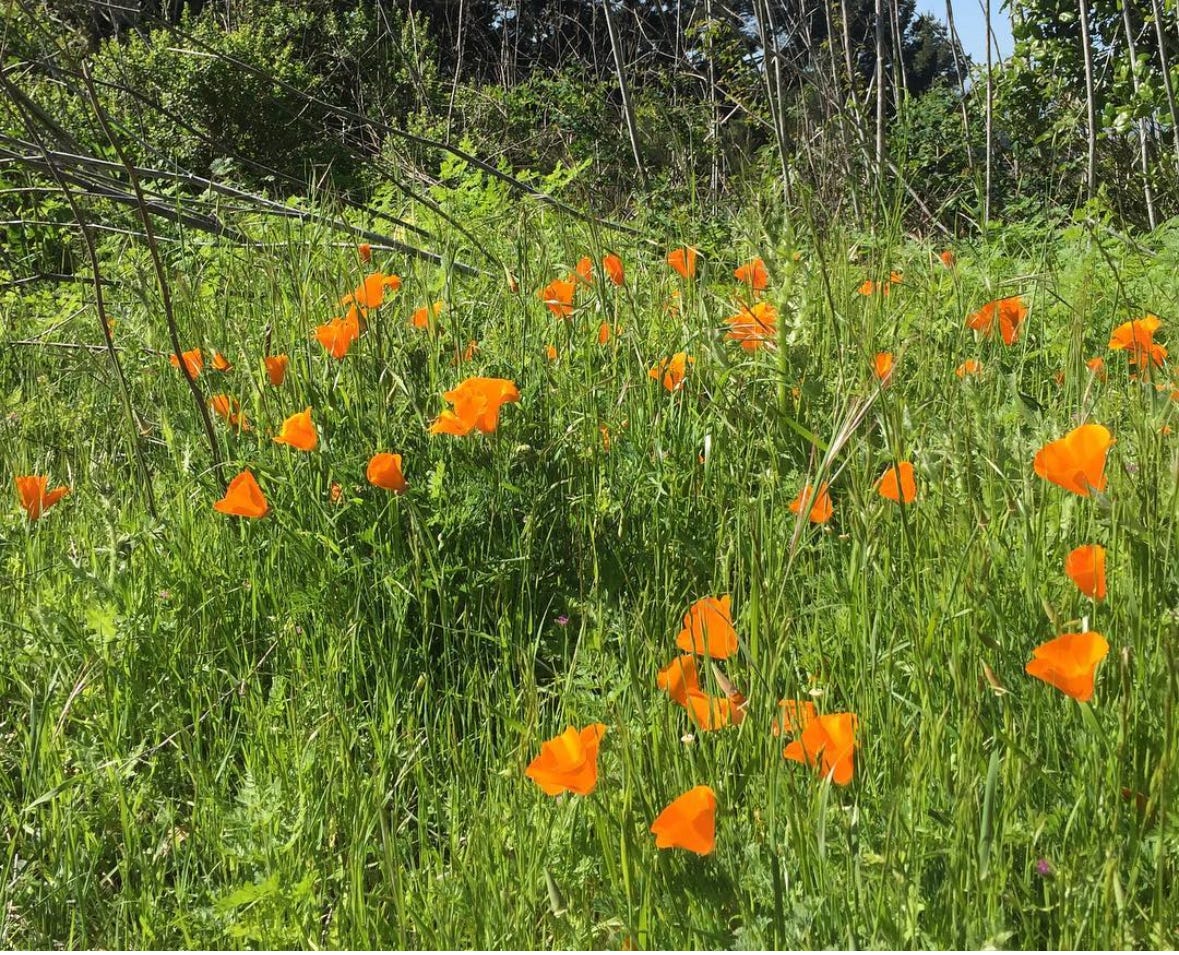
The third time I thought I saw Nancy out walking in Berkeley, I realized I had a situation.
I cognitively, rationally understood my friend was dead—my wife Sally and I talked about Nancy and acknowledged her death regularly. But some ancient, wordless part of me hadn’t received the message.
I knew two things: I needed a mourning ritual and I wanted a witness.
By mourning ritual I meant some intentional act to mark the threshold she—and by extension, we—had crossed. Nancy, who had been alive, was now dead.
Wanting a Witness meant involving someone who knew Nancy and who “felt right.” I didn’t know what that meant but trusted that I’d figure that out.
Grief is what you think and feel on the inside, and mourning is when you express that grief outside of yourself. Mourning is grief inside out. Mourning is showing and doing.
— The Center for Loss
Human beings are social creatures and communal mourning rituals offer one stepping stone toward a life without the now-dead person. Being together helps us accept—or at least try to start to accept—what is.
The pandemic messed with this, in a big way.
Not only were mourning rituals like memorials or funerals postponed or never scheduled for fear of spreading the virus, but reality was upended.
If nearly everyone is physically absent from my life (except those in my pod), how do I distinguish between the loss that is temporary and the loss that is permanent?
Inviting another person who knew Nancy to participate in this ritual with me would make the loss real, in a way I clearly needed.
I considered a couple options: hosting a zoom call with mutual friends to talk about her, focusing a daily meditation on her life. None of them captured what I wanted.
Then I landed on re-creating a walk she and I took regularly along San Francisco Bay. She preferred a specific route and I was always happy to defer. This time I’d follow her lead in a new way.
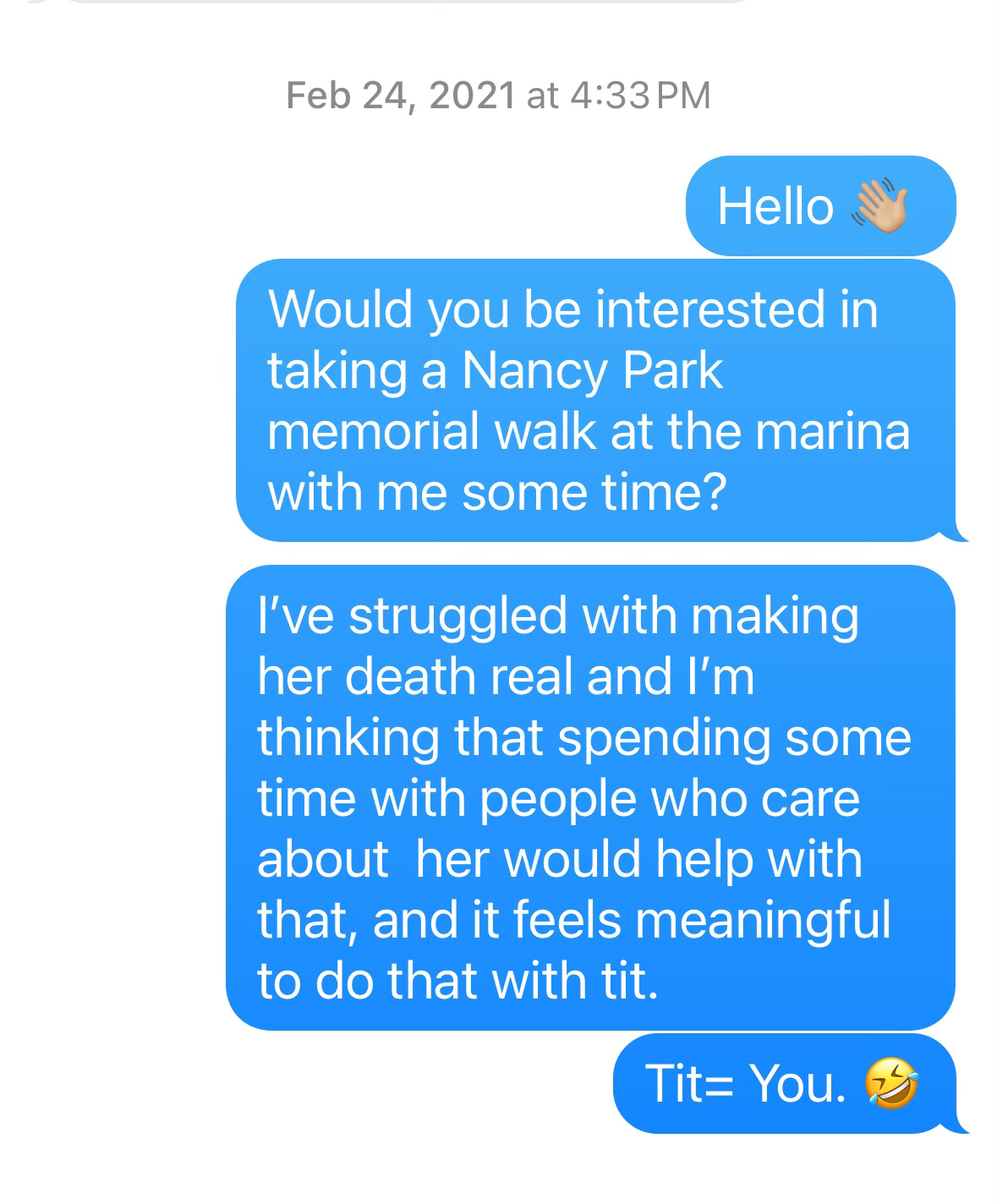
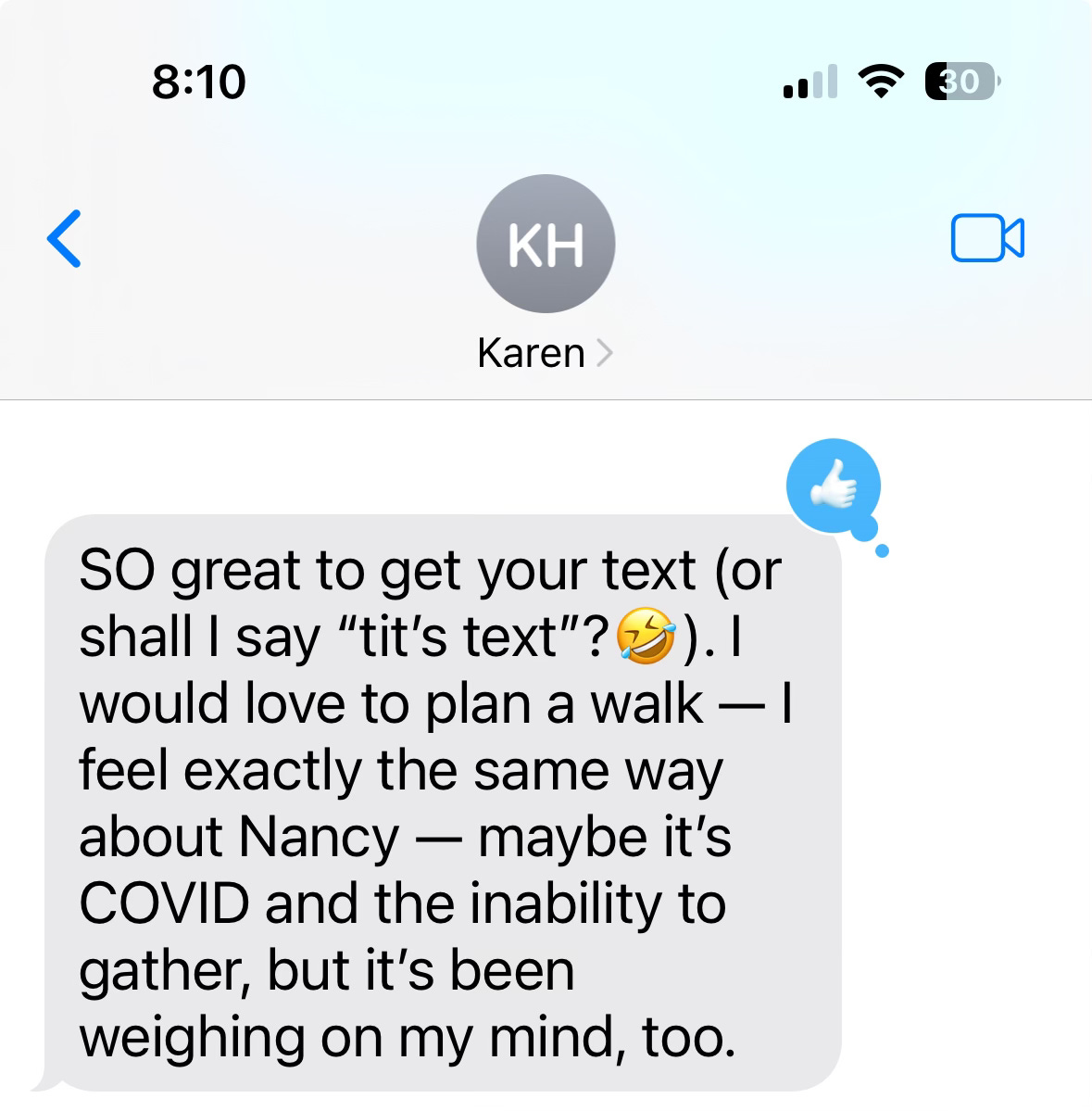
Two months after Nancy’s death, I texted a mutual friend. She and Nancy knew each other from working at the University and the three of us had served on a library fundraising board. We worked closely and enjoyably together, nerding out about governance issues. Karen was the person who “felt right.”
Karen and I met at Berkeley’s North Waterfront Park, a large green expanse on a peninsula poking into San Francisco Bay. It’s populated by excitable off-leash dogs and well-fed ground squirrels and bracketed by stunning views of the Golden Gate Bridge to the west and rising green hills to the east.
As we walked the wide asphalt path lining the rectangular park, Karen and I told each other our Nancy-stories, We traced the contours of our friendships from first meetings until the last time we each saw her.
We spoke about the obituary and marveled at what we learned from reading it—here-to-fore unknown regions of the Nancy-Universe.
I named out loud what I appreciated about Nancy and what remained a mystery to me.
I laughed.
I wiped away tears.
Halfway into our memorial pilgrimage, Karen and I left the asphalt for a dirt path closer to the shoreline, heading toward a generously-sized wood bench.
A metal plaque set into the seat-back dedicated the bench to the memory of a Berkeley physician, one of Nancy’s friends. When Nancy and I made this walk, if the bench was unoccupied, she’d alter our path to walk in front of it.
“Hello, John,” Nancy would say, offering a brief wave to the bench and the plaque, as we continued our walking and our living.
This day, Karen and I sat on the bench.
“Hello, John.” I said. “Hello, Nancy.”
Karen and I sat in silence together.
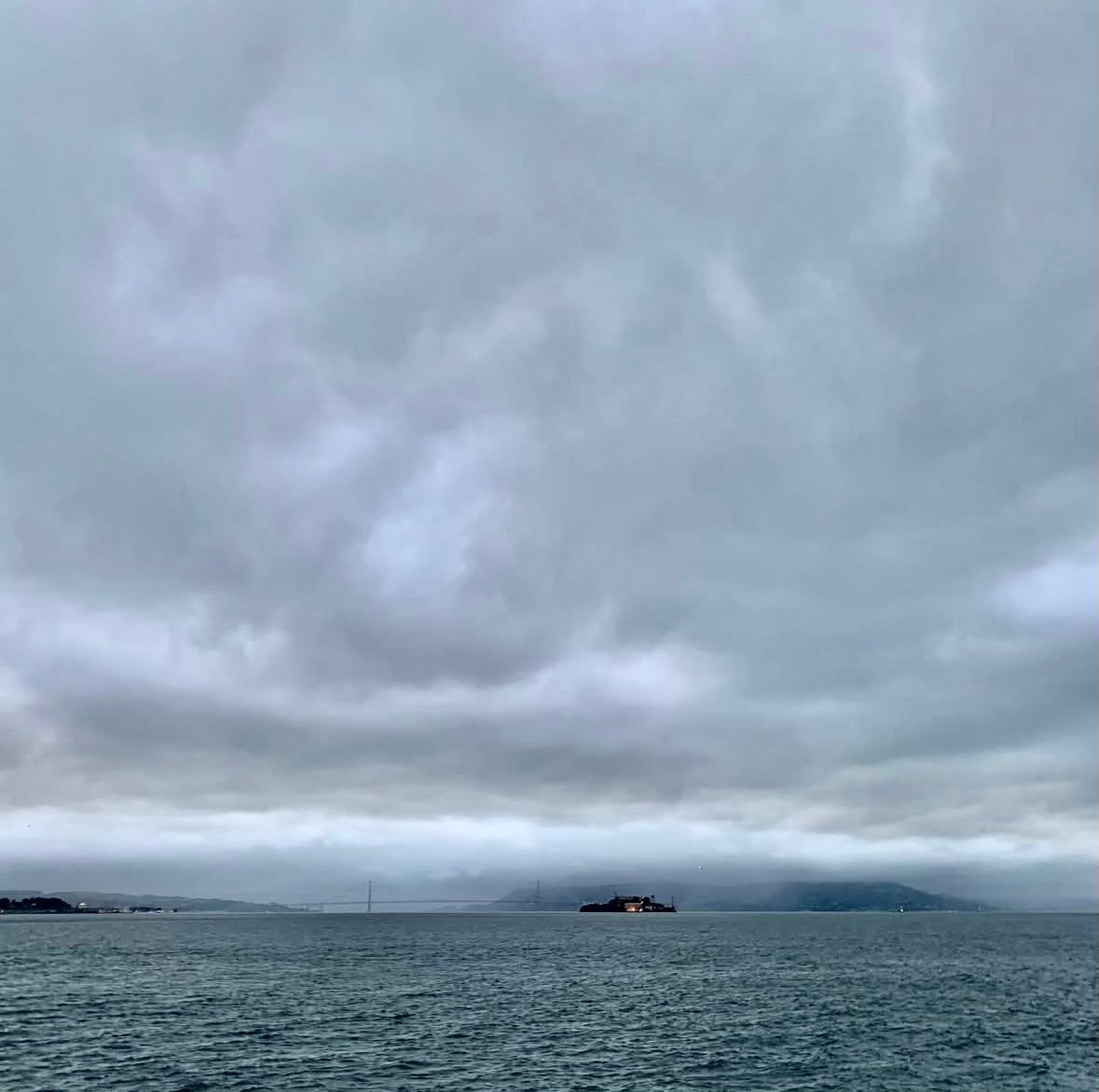
I gazed out past the rocky shoreline, across the grey green water of the Bay to the horizon stretched out below the muted orange bridge.
Mount Tamalpais rose in the north.
The sky was a subtle mix of blues and greys.
Sailors motored out of the marina toward the open water and the wind.
Sounds—of sea and shore birds, of other walkers talking, of life—surrounded us.
I took a deep breath, and releasing it, felt my body soften and relax.
I felt the world’s vastness and Life’s mystery.
I knew myself a part of it—and that Nancy’s life and death was, as well.
She had joined John in death, but also in living memory.
Someday I would, too.
Twin emotions welled up in me: a soft grief and a sturdy gratitude.
Soon after, Karen and I returned to where we’d started at the Park’s entrance. We smiled at each other and said “thank you.” We held up our arms and flapped our hands at each other in that pandemic-hug-from-a-distance dance.
We were changed.
I never saw Nancy walking in Berkeley again.
It was bittersweet.
Two years later in March 2022, Nancy’s son and family organized a casual Celebration of Life gathering at the Park, including the reveal of a commemorative bench in her name.
It was a classic Berkeley spring day—you feel warm in the direct sunlight but in the shade you’re glad for an extra layer. I saw a mix of familiar and unfamiliar faces but all of the hellos felt new; everyone was coming out of a pandemic and seasonal hibernation.
It was good to be with all those people. To hear her son and some of her siblings speak about her life and tell a few of their Nancy stories. To see Nancy’s smile on her niece’s face, to hear Nancy’s voice in the cadence of her sister’s words.
It was good to be with all those people—and yet, later that evening as I thought about the Celebration of Life, I realized that it alone wouldn’t have been enough, for me.
The simple, intimate memorial pilgrimage Karen and I took together—and the two year old memory of it—was the ritual that held the greatest personal meaning.
But to mourn Nancy’s death, I needed them both.
Did you have to figure out how to mourn a death during the pandemic? Were there intentional acts or rituals that were helpful to you? Is there a particularly meaningful mourning ritual you’d like to share with other readers? I’m interested to hear your experience.
As you think about creating your own mourning rituals, are you feeling stuck or have questions? I won’t claim to have an answer, I’m glad to think about the questions and offer my response. Leave your questions in the comments or message me by clicking the red button:
Thank you for reading—
Until next week,
Rachel